












The air transport sector is starting to take off again, very slowly but surely. In France, Orly reopened this morning and, in general, the airlines are planning to slowly rebuild their network without increasing their service.
The recovery of the industry will logically depend on two factors: supply and demand. Supply because the first constraint is already to have the right to fly planes between two countries, which remains a major constraint, and because it is not possible to sell seats that do not exist. Demand, precisely, because it will not be possible to sell flights to people who cannot and do not want to travel.
The complexity of the exercise, and we will be talking about this at length in the coming weeks, will be for the airlines to propose an offer that is sufficient to find customers without being too scarce to prevent theyield management to make its prices prohibitive nor too important in order to remain profitable.
So today we are going to look at the demand. Who are the people who are going to fly again in the next few weeks? Why this choice or any other? What is the profile of this clientele in order to better try to target it in terms of offers and pricing?
So we’ve been thinking about the different factors that will make a person take to the skies or not in the next few weeks.
The nature of the trip: business, tourism, VFR?
An individual has broadly three reasons for travelling: business travel, tourism (the important thing is the destination) and visiting friends and relatives (VFR).
As already explained in this video, business travel will be in decline for some time to come. For health reasons, for cost saving reasons and because it was learned that remote work could replace some meetings until the day when a logical pendulum effect will learn that we cannot do everything without human, physical contact.
Despite the fact that the government is urging people to stay in France this summer for both health and economic reasons, months of confinement will make a number of people want to go out and get some fresh air without, of course, reaching “normal” volumes.
An underestimated factor is VFR. Too often when we talk about “non-business” travel we mean tourism, whereas a large number of people do not travel specifically for a destination but to see people, their family. To a certain extent, the journey may even be a constraint they would like to do without. There are also children who are forced to yo-yo between two separated parents. Here again, the confinement effect will come into play and the desire to see one’s family again will be an important motivation, perhaps more than tourism.
Our prediction: 10% business, 45% tourism, 45% VFR.
Fear of the virus
The government’s communication, which is not very encouraging and is very anxiety-provoking, may have been successful, but it will leave its mark. That everyone should be cautious is logical, but today it borders on an almost irrational level of fear for far too many people.
However, it is obvious that a person who fears for his health will not travel or at least not abroad. and as we mentioned in a previous video, don’t expect people to forget their fear as long as COVID-19 is in the top 3 or 4 stories on the news.
Our prediction: 1 in 2 people will think twice before booking and 1 in 4 will be too scared to do so.
The economic constraint
People are afraid for their jobs and some have already lost a lot in the containment. But even if, on the other hand, spending was logically in free fall, the impact of the economic factor would be major in a French population in which the virus of precautionary saving has never been eradicated, seeing its propagation reach new heights at the slightest cloud.
But on the other hand there are other realities. As we will see later, airlines will play the low price card and we can expect a bargain effect that will motivate many. It remains to be seen which category of travellers will be more specifically targeted.
And holidays are not just about transport, they are also about accommodation and food. France is a very expensive country even (or even especially) for its own inhabitants for a generally very low level of service and especially in the coastal areas. It is not for nothing that 50% of air travellers in France are low socio-professionals categories and inactive people for whom a holiday in France is an unaffordable luxury. But for those who do, the choice may not be aeroplane or not or France or not, it will be holiday or not and it will generally be “not”.
Our prediction: holiday budgets will be reduced in a context of uncertainty, which will affect all forms of holidays and travel
The health constraint at destination
Closed or open borders, the need to produce tests and certificates, compulsory quarantine… this is certainly the factor that will count the most because it is imposed on everyone and no one can avoid it except for rare and restrictive exceptions.
Our prediction: 100% of passengers will take this factor into account, 75% will adapt their destination to the constraints, 25% will refuse to travel because they cannot go where they had planned.
In-flight and airport health constraints
The resumption of airline operations is accompanied by a range of health precautionary measures, which we have already mentioned. For some people they will simply be unacceptable, not in terms of their legitimacy but their impact on the travel experience.
Beyond the various checks, some people, for reasons of comfort or health (respiratory difficulties), will not be able to bear wearing a mask on a 3-hour flight and even more so on a long-haul flight of 10 hours or more.
It remains to be seen how these constraints will be experienced according to the traveller’s profile. The front classes, especially in long-haul, are ‘distanced’ by definition and one can imagine that in cabins offering individual suites the control of the wearing of masks will be lighter, but it is the passengers who will quite often see their overall experience the most degraded, in any case in proportion to the price paid, which they will perhaps no longer consider justified.
Our prediction: 33% of passengers will find the constraints too inconvenient.
Service degradation
Health constraints are accompanied by an adaptation of the service by the airlines, sometimes to dramatic proportions as we saw in the #DEGRAD19 barometer.
Between the strict adaptation to health measures and real cost-cutting wrapped up in a health discourse which will only fool the most gullible and depending on the class and length of travel the situation varies too much from one airline to another to be able to generalise and the situation will be assessed on a case by case basis.
Air France no longer offers any services on flights of less than 2.5 hours (unlike its low cost Transavia), and botches 50% of its long-haul business service, no hot food on KLM under 9 hours, Turkish Airlines degrades its service unacceptably and bans cabin baggage, while on Qatar Airways, Lufthansa and Swiss almost nothing changes. We leave it to you to look at the price of the ticket compared to “before” and make a conscious choice.
Our prediction: uninformed or vigilant, the economic and leisure clientele will not take this factor into account and will complain afterwards, whereas the premium clientele will be much more vigilant about a level of service in line with the price paid. Unluckily, it’s the one that makes the bulk of an airline’s margins.
To help you :
Service degradation
The number of passengers. Travelling with full knowledge of the facts and assuming the risk, yes. Should you take your whole family with you, even if the children are not at risk? Not everyone will dare, especially with the health constraints and the deterioration of the service, which are two reasons why children will find the journey even more restrictive than adults. And then there is the risk of being stranded abroad in the event of a second wave.
And even in pairs…it is enough that one and the other do not share the same notion of acceptable risk for both to stay at home.
Our prediction: A lot of solo travelers, a little less couples and very few families.
The world after
We are in a new world and our behaviour is changing. Or that is what we may be told or led to believe in the form of a self-fulfilling prophecy.
One reads anything and everything in terms of studies and surveys on the subject, depending on the sponsor of the survey in question. Especially since one should not confuse the answer given under the shock of the confirmation with the behaviour one has 2 months later when going on holiday. Beaucoup de ceux qui rêvaient de changer d’endroit pour changer d’avis auront changé d’avis (et pas forcément pour changer le monde) et, à l’inverse, la conscience écologique et anti-consumériste de certains autres aura fondu comme neige au soleil.
Our prognosis: very minor impact.
Of course for a given person all these factors apply at the same time, each one has its own criteria and weights them in its own way. But this proves that the subject will be complex to understand and analyse for the airlines which will nevertheless have to adapt their offer as best they can. Not to mention the passengers who will face some dilemmas.
These figures are of course only the result of our own reflection and, knowing that making predictions is complicated, especially when they concern the future, we will let the official figures speak at the end of the season.
What about you, what are you doing this summer? Why? Tell us in the comments.
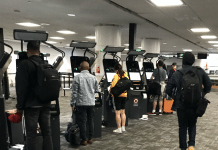
Photo : Passenger wearing a mask by Zephyr_p via Shutterstock
Articles similaires

 What service on Turkish Airlines with COVID health restrictions?
 What service on Delta with COVID health restrictions?
 What service on United with COVID health restrictions?
 What service on Qatar Airways with COVID health restrictions?

